


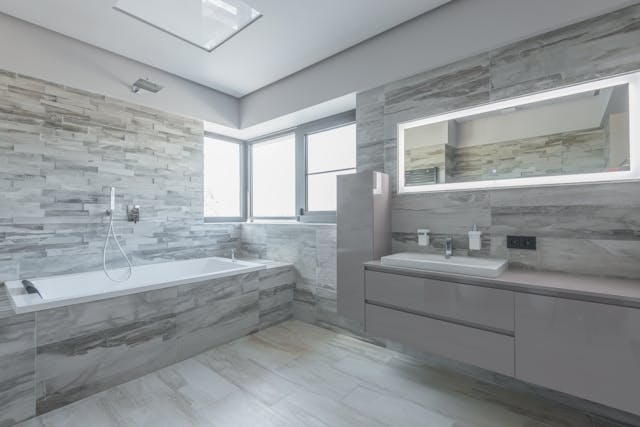
Most people talk about bathrooms as purely functional spaces. Somewhere to shower, brush your teeth, find a towel, curse the missing shampoo, then leave. But that view sells the room short. In many homes, the bathroom is the first real control room of the day.
It’s where the morning gets negotiated. The lighting, layout, storage, mirror placement, ventilation and surfaces all quietly decide whether the household starts calmly or in a low-grade state of chaos. That’s why thoughtful bathroom design isn’t just about tiles and tapware. It’s about behaviour.
A well-planned bathroom supports movement, timing and routine. It gives every object a logical place. It makes shared use less annoying. It lets one person shave while another finds skincare. It keeps towels dry, steam under control and the floor clear. When homeowners work with specialists like Simply Bathroom renos, the conversation often shifts from “what will look good?” to “how does this room actually need to work?”
That’s the more useful question.
The Morning Bottleneck
In many homes, the bathroom becomes a pressure point before the day has properly begun. Everyone needs access at roughly the same time. The shower is running. Someone’s looking for a hairbrush. Another person needs the mirror. A drawer jams. The fan can’t keep up. The lighting makes it impossible to tell whether you look awake or medically concerning.
None of these problems sound dramatic on their own. Together, they create friction.
A bathroom that functions as a morning control room reduces that friction. It doesn’t just contain fixtures. It choreographs use. The best designs understand sequencing: wash, groom, dress, store, clean, leave. Each part of the room should support that sequence without forcing awkward movement or unnecessary clutter.
That might mean a double vanity in a family home. It might mean a recessed shaving cabinet in a smaller apartment. It could be as simple as moving towel rails to where people actually reach for towels, not where they happen to fit on a wall.
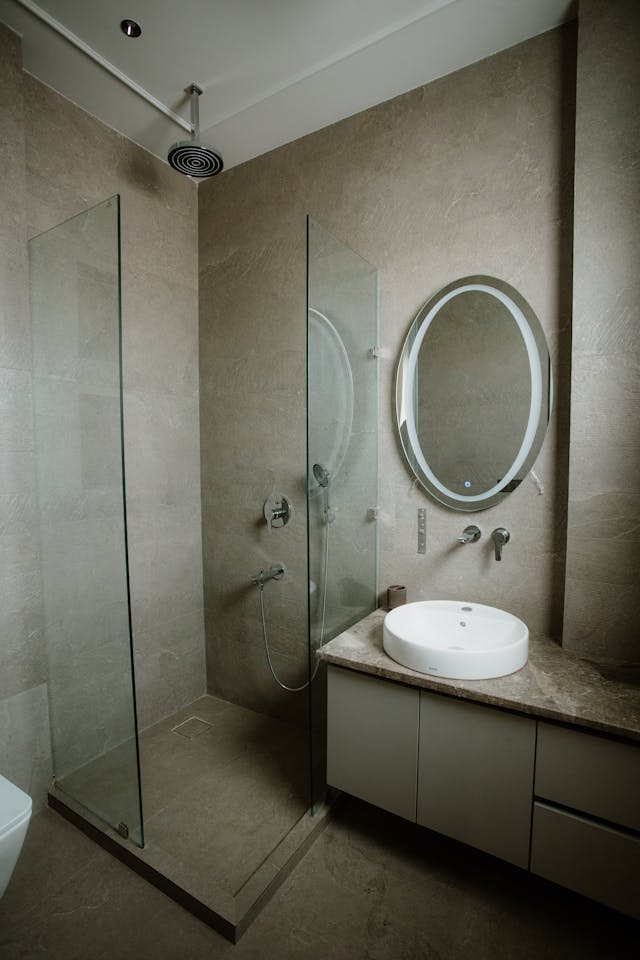
Storage Is Not a Bonus Feature
Poor storage is one of the fastest ways to turn a beautiful bathroom into an irritating one. Open the wrong bathroom cabinet and you’ll often find a museum of expired sunscreen, half-used products, mystery cables and travel-sized bottles kept for no defensible reason.
Good storage is specific. It accounts for the items people use daily, weekly and occasionally. Daily-use products need to be accessible without covering the vanity. Cleaning supplies need a discreet home. Spare toilet rolls should be reachable but not displayed like décor. Electrical items need safe, practical placement.
Drawers often outperform cupboards because they let people see what they own. Mirrored cabinets work hard in compact rooms because they combine reflection, storage and wall use. Niches in showers reduce bottle clutter, provided they’re properly sized and positioned.
When storage is designed around habit rather than guesswork, the bathroom becomes calmer almost immediately.
Lighting Sets the Tone
Bathroom lighting has to do several jobs at once. It needs to wake you up without making the room feel like an airport security checkpoint. It needs to support grooming without creating harsh shadows. It also needs to soften at night, especially in ensuites where one person may be awake while another is still pretending tomorrow doesn’t exist.
Layered lighting is the answer. Overhead lighting gives general visibility. Task lighting around the mirror helps with shaving, makeup and skincare. Accent lighting can make the room feel less clinical. In some homes, a low-level night light or motion-activated feature can make early starts and late-night visits far less disruptive.
A bathroom that gets lighting right feels easier to use. It also photographs better, ages better and generally feels more expensive than it may be.
Ventilation Is a Design Issue
Ventilation rarely gets the glamour treatment, but it has enormous influence over how a bathroom performs. Steam, condensation and poor airflow can damage finishes, encourage mould and leave the room feeling damp long after the shower stops.
A good morning control room clears itself efficiently. The mirror shouldn’t stay fogged for twenty minutes. Towels should dry properly. Painted surfaces, cabinetry and grout should be protected from constant moisture.
This is where practical design matters more than showroom fantasy. The fan needs to suit the room size. Windows, where available, need to contribute meaningfully. Materials should be chosen with moisture exposure in mind, not just colour preference.
A bathroom that can’t manage humidity isn’t finished. It’s just waiting to become a maintenance problem.
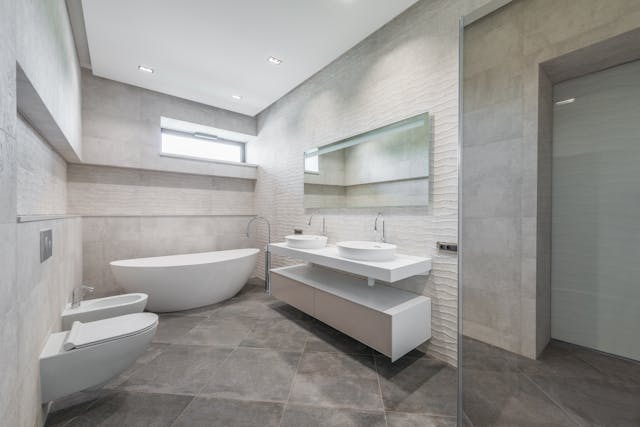
Layout Controls Behaviour
The layout of a bathroom affects how people move through it, especially when time is tight. A door that opens awkwardly, a toilet placed too prominently, a shower screen that blocks access to storage, a vanity with no landing space; these details shape daily experience.
The best layouts feel almost obvious once they’re done. Wet areas are contained. Pathways are clear. Frequently used items are within easy reach. Privacy is considered. Cleaning isn’t made harder than it needs to be.
In smaller bathrooms, clever layout becomes even more important. Wall-hung vanities can create a sense of floor space. Walk-in showers can reduce visual clutter. Large-format tiles may help the room feel less broken up. But every choice should serve the way the room is used, not just the way it appears in a brochure.
Materials Need to Survive Real Life
A morning bathroom takes punishment. Water, heat, cosmetics, toothpaste, dropped hairdryers, damp towels, cleaning products, muddy kids, rushed adults. The finishes need to cope.
This doesn’t mean the room has to look utilitarian. It means surfaces should be chosen with maintenance in mind. Porcelain tiles, quality tapware, moisture-resistant cabinetry and durable benchtops all contribute to a bathroom that keeps working after the initial renovation glow wears off.
A highly textured tile might look beautiful, but will it be annoying to clean? A dark basin may look dramatic, but will it show every water mark? A timber-look finish may add warmth, but is it suitable for the level of moisture in the room?
The right materials make daily life easier. The wrong ones create chores.
A Better Morning Starts Before Breakfast
A bathroom doesn’t need to be huge or lavish to become the control room of the morning. It needs to be intentional. It needs to understand who uses it, when they use it, what they reach for and where the current frustrations sit.
That’s the difference between a wet room and a working room.
A wet room handles water. A morning control room handles people. It supports habits, reduces delays and gives the day a cleaner start. In a home where mornings are already crowded, rushed or unpredictable, that’s not a small upgrade. It’s infrastructure for everyday sanity.










Leave a comment